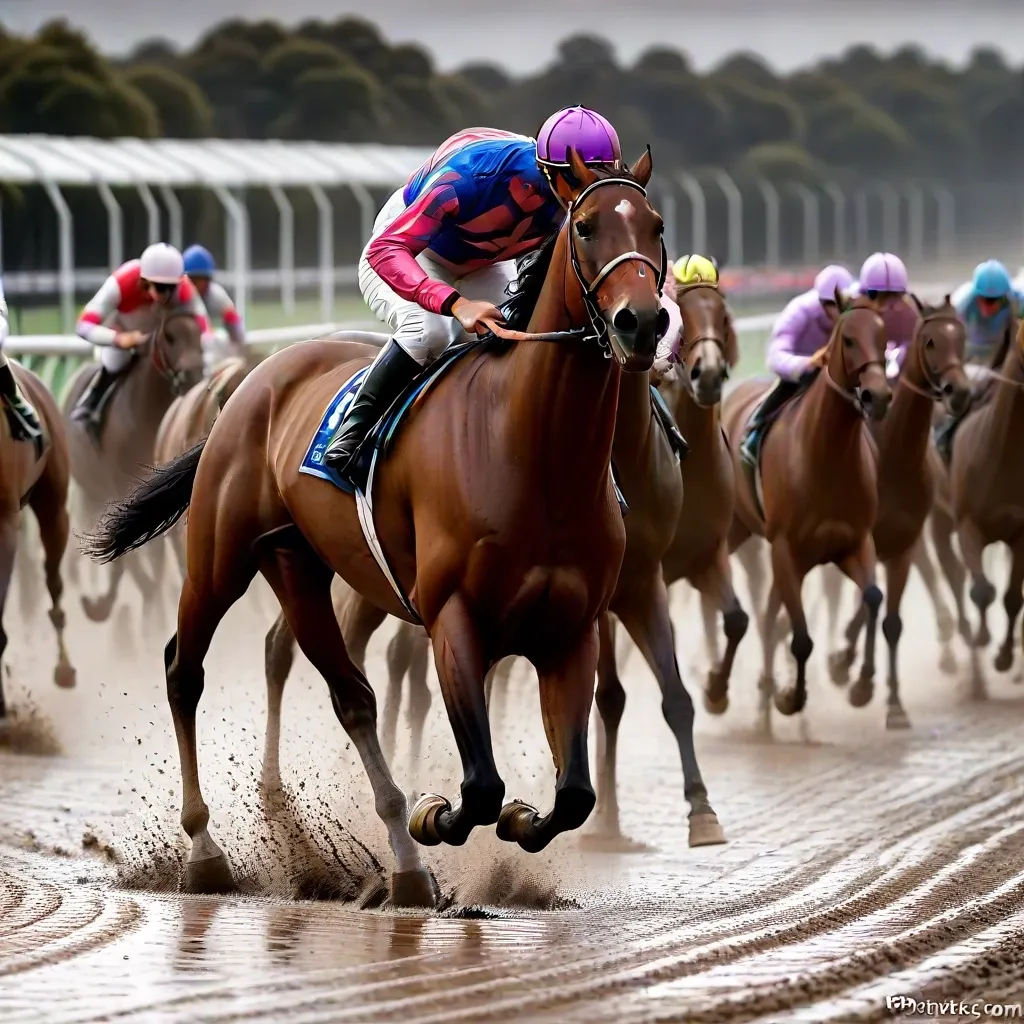
Horse racing is a thrilling sport where strategy and insight can dramatically enhance one’s betting success. While many casual bettors focus on factors like jockey skill or horse pedigree, one often-underestimated element is the track condition. Specifically, a type of horse known as a “mudder” can turn rainy race days into incredibly profitable opportunities.
Mudders are horses that possess a unique ability to excel on wet or muddy tracks, conditions that hinder most other runners. Understanding these horses, and how to identify them, is a critical skill for anyone serious about horse racing betting. When the skies darken and the track turns sloppy, the odds shift, and the mudders come alive.
From personal experience, identifying and strategically betting on the mudders has significantly improved betting outcomes. It’s about recognizing an edge that many others overlook. This knowledge transforms potentially unpredictable race days into opportunities for well-informed, strategic plays.
Decoding Track Conditions
Understanding track conditions is crucial for anyone looking to make informed decisions about horse races. The surface of the track significantly impacts a horse’s performance, and handicappers need to assess these conditions accurately. Tracks are rated based on their moisture content and composition, ranging from the firmest “fast” to the deepest “heavy.” Here’s a breakdown of what each rating means:
- Fast Track: This is the ideal condition, a dry, even, and resilient surface. A fast track is typically light in color, indicating low moisture. Horses generally achieve their quickest times on this surface. Track maintenance involves harrowing to maintain evenness and proper drainage to prevent water accumulation.
- Good Track: Slightly slower than “fast,” a “good” track has some give to it. It may have a slightly darker appearance than a fast track due to a bit more moisture. This condition is still considered favorable for racing, representing a balanced surface.
- Muddy Track: Significant moisture saturation defines a “muddy” track. It’s distinctly dark and heavy, with visible puddles possible. Horses will sink noticeably into the surface. This condition arises from heavy rain but is often considered less severe than “sloppy.”
- Sloppy Track: Similar to “muddy,” but with a looser, wetter surface. This condition usually follows prolonged or very heavy rainfall. Kicking back of water and mud is characteristic. Expect slower running times as horses exert more energy navigating the wet track.
- Heavy Track/Slow: The deepest and wettest condition. A “heavy” track is extremely saturated, often waterlogged, and very tiring for horses. Times are significantly slower. This rating is common in turf racing but can also apply to dirt tracks after extreme weather. A “slow” track is similar, but potentially slightly less saturated than “heavy.”
- Turf Track Variations: Turf tracks have their own variations depending on grass type, length, and moisture. Common ratings include “firm” (similar to fast), “good” (ideal balance), “yielding” (some give), and “soft” (significant moisture). Conditions are affected by rainfall and drainage efficiency.
Recognizing the visual cues and understanding the impact of maintenance practices like harrowing and sealing will greatly improve your ability to assess track conditions and their effect on a horse’s chances.

Why Mudders Excel on Wet Tracks
When the skies open and the track turns to slop, some horses thrive while others falter. These are the “mudders,” horses that seem to relish the challenge of a wet track and often outperform their dry-track rivals. The question is, what gives these equines such a distinct advantage? The answer lies in a combination of physical and physiological attributes that are uniquely suited to navigating the challenging conditions.
One crucial factor is stride length. While a long, fluid stride is advantageous on a fast, firm surface, it can become a liability in the mud. A shorter, more compact stride, on the other hand, allows a horse to maintain better traction and power through the heavy going. Think of it like driving a car: you wouldn’t try to accelerate quickly on ice. Similarly, mudders can generate more force with each step, preventing them from losing momentum in the clinging mud.
Stamina plays a vital role. Wet tracks are more taxing on horses than dry ones. The increased resistance of the mud requires a greater expenditure of energy with each stride. Mudders tend to possess superior stamina, allowing them to maintain their speed and power output throughout the race, while other horses tire and fade. They are able to handle the attrition of a slowly ran race.
Breathing efficiency is another key piece of the puzzle. The increased exertion required to run on a wet track demands greater oxygen intake. Horses with well-developed respiratory systems can deliver oxygen to their muscles more efficiently, delaying fatigue and maintaining performance. This is something that I saw in more than one race. The horse that seemed to struggle the least in breathing, was the one who won. The ability to process more oxygen gives a tremendous edge when other horses are starting to feel the burn.
In essence, a mudder’s success isn’t just about luck; it’s about possessing the right combination of physical attributes and physiological capabilities to conquer the unique demands of a wet racetrack.
Identifying Potential Mudders
Unlocking the secrets to handicapping horse races often involves deciphering which horses will excel when the track turns sloppy. These horses, affectionately known as “mudders,” possess a unique ability to navigate wet conditions with surprising speed and agility. Identifying potential mudders requires a keen eye and an understanding of several key factors, including pedigree, past performance, and conformation.
Pedigree: A horse’s lineage can provide valuable clues about its aptitude for wet tracks. Delving into a pedigree chart and looking for ancestors known for their success on off-track conditions is a smart move. Some bloodlines inherently produce horses that handle the mud better than others. Look for names that consistently appear in the past performances of winning mudders; this could indicate a genetic predisposition for wet track success.
Past Performance: Analyzing a horse’s past performance data is critical in mudder identification. Scrutinize speed figures and finishing positions from races run on wet tracks. A horse that consistently improves its speed figure or finishes higher in the standings when the track is sloppy warrants a closer look. Also, remember to consider the competition; a win against weaker opponents on a wet track may be less significant than a strong showing against tougher rivals.
Conformation: While often overlooked, a horse’s conformation, or body structure, can significantly impact its ability to handle wet conditions. Horses with a more compact, powerful build and a shorter stride often fare better in the mud. Their build provides more stability and allows them to maintain momentum on the less-than-ideal surface. Examine photographs and observe the horse’s physique for clues about its suitability for the slop.
Formbook Analysis
The formbook serves as a comprehensive record of a horse’s racing history, offering valuable insights into its performance under various conditions. Some horses have a clear preference for a wet track, demonstrating a significant improvement in their results when the surface is anything but fast. Take, Royal Pagaille, for instance. This horse’s record reveals a distinct advantage on softer ground, with his wins exclusively occurring on tracks labeled as soft or heavy. Analyzing the formbook to identify horses like Royal Pagaille, who exhibit a consistent pattern of success in similar conditions, is a key strategy for finding potential mudders.
Case Studies: Mudder Success Stories
Analyzing the careers of horses renowned for their prowess in muddy conditions – often called “mudders” – offers valuable insights for handicappers. These success stories reveal recurring traits and patterns that can aid in predicting future performance on off tracks.
Case Study 1: The Stamina King
Consider the case of a horse particularly successful on slop, owing to its exceptional stamina. Bred for distance running, this horse possessed a pedigree rich in stamina influences, with both sire and dam known for producing offspring capable of excelling in longer races. This inherent stamina was crucial in navigating the tiring conditions of a muddy track, allowing the horse to maintain its speed and strength when others faltered. Furthermore, the horse’s training regimen focused on building endurance, incorporating long, slow gallops and interval training to enhance its cardiovascular fitness. Its racing style, characterized by a steady, ground-covering stride, was also well-suited to mud. By conserving energy early in the race, it could unleash a powerful finishing kick in the final furlongs, pulling ahead when other horses were struggling in the conditions.
Case Study 2: The Agile Sprinter
Another example involves a horse that was a standout mudder, primarily because of its agility and quick acceleration. While not necessarily bred for stamina, this horse possessed exceptional athleticism and a natural ability to handle the slick surface. Its pedigree may have included sprinting influences, contributing to its inherent speed and agility. The horse’s training emphasized agility drills and speed work, honing its ability to navigate the mud with precision and change direction quickly. Its racing style was characterized by a fast break from the gate and an ability to maintain its speed throughout the race. The horse’s compact build and efficient stride allowed it to skip over the surface, minimizing the impact of the mud and maximizing its speed.
Case Study 3: Tiznow
Tiznow, exemplifies a horse whose success was undeniably linked to its ability to perform on a less-than-ideal track. While a champion on fast dirt, some of Tiznow’s most memorable performances came on surfaces that were anything but. This wasn’t simply luck; it was a combination of pedigree, inherent athleticism, and perhaps an intangible quality that allowed him to dig in and find another gear when others struggled.

Betting Strategies for Wet Tracks
Smart horse racing bettors understand that track conditions dramatically impact a horse’s performance. A muddy or sloppy track—often referred to as an “off track”—can neutralize speed and bring stamina or mud-loving horses to the forefront. Therefore, a sound betting strategy always factors in the track condition.
One essential adjustment is reconsidering pre-race handicapping. What looked like a sure thing on a fast track might be a different story when it’s raining. Certain horses thrive in the slop, and their odds might not reflect their true potential value. Look for horses with proven records on wet tracks; this information is readily available in past performance data.
Identifying overlooked value is key to successful betting on off tracks. The betting public often overreacts to track conditions, creating opportunities for astute handicappers. A horse that might have been a long shot on a dry track might become a serious contender on a muddy surface. Analyze the odds, and if a horse with a solid wet-track pedigree is being underestimated, it could represent a lucrative betting opportunity. Search for horses that had good speed and ranking but are now available for higher odds.
Don’t underestimate jockey experience in the slop. Some jockeys excel on wet tracks, demonstrating skill in navigating the challenging conditions and getting the most out of their mounts. Review a jockey’s record on off tracks. A jockey with a high win percentage in the mud can give a horse an edge, all other factors being equal.
Overcoming Common Misconceptions
Horse racing, steeped in tradition and excitement, often comes with its fair share of misconceptions, especially when the track gets wet. Understanding the truth behind these myths is crucial for making informed betting decisions and appreciating the nuances of the sport.
One common myth is that a specific pedigree automatically guarantees success on a wet track. While lineage can play a role, it’s far from a sure thing. A horse’s individual conformation (physical structure), past performances on similar surfaces, and running style are all vital factors that can outweigh any presumed advantage based solely on bloodlines. Just because a horse’s sire was a mudder doesn’t automatically mean their offspring will excel in the same conditions.
Another misconception is that any horse can handle a wet track. In reality, only specialists truly thrive in these conditions. The changed surface dramatically alters the race, requiring a different set of skills and adaptations. Some horses simply don’t have the stride or the preference for a less firm surface to compete effectively when it rains. It’s about more than just tolerance; it’s about excelling in the changed dynamic.
Therefore, it’s essential to look beyond simple generalizations and dig deeper into a horse’s specific history and characteristics to accurately assess their mudder potential.
Conclusion
In the thrilling world of horse racing, understanding track conditions and spotting a true mudder can be the difference between a winning day and a disappointing one. This knowledge isn’t just a fun fact; it’s a powerful tool that can significantly boost your betting success.
By paying close attention to the weather, analyzing the track surface, and studying past performances on different track conditions, you’re arming yourself with insights that most casual bettors overlook. Remember, a horse’s ability to handle a wet track isn’t always obvious from its overall record. Dig deeper, look for those hidden clues, and identify the horses that thrive when the going gets tough.
Horse racing is a constantly evolving game. New data emerges, track conditions change, and horses adapt. The most successful handicappers are those who embrace continuous learning and adjust their strategies accordingly. So, take what you’ve learned here, apply it to your next race day, and watch your betting acumen grow. The track is calling, and with a little mud sense, you’ll be ready to answer.